Where Footsteps Play
We worked very closely on this project and it wasn't broken into specific roles, but I did focus a lot on the coding parts of this project, along with research, concepting, and assembly.
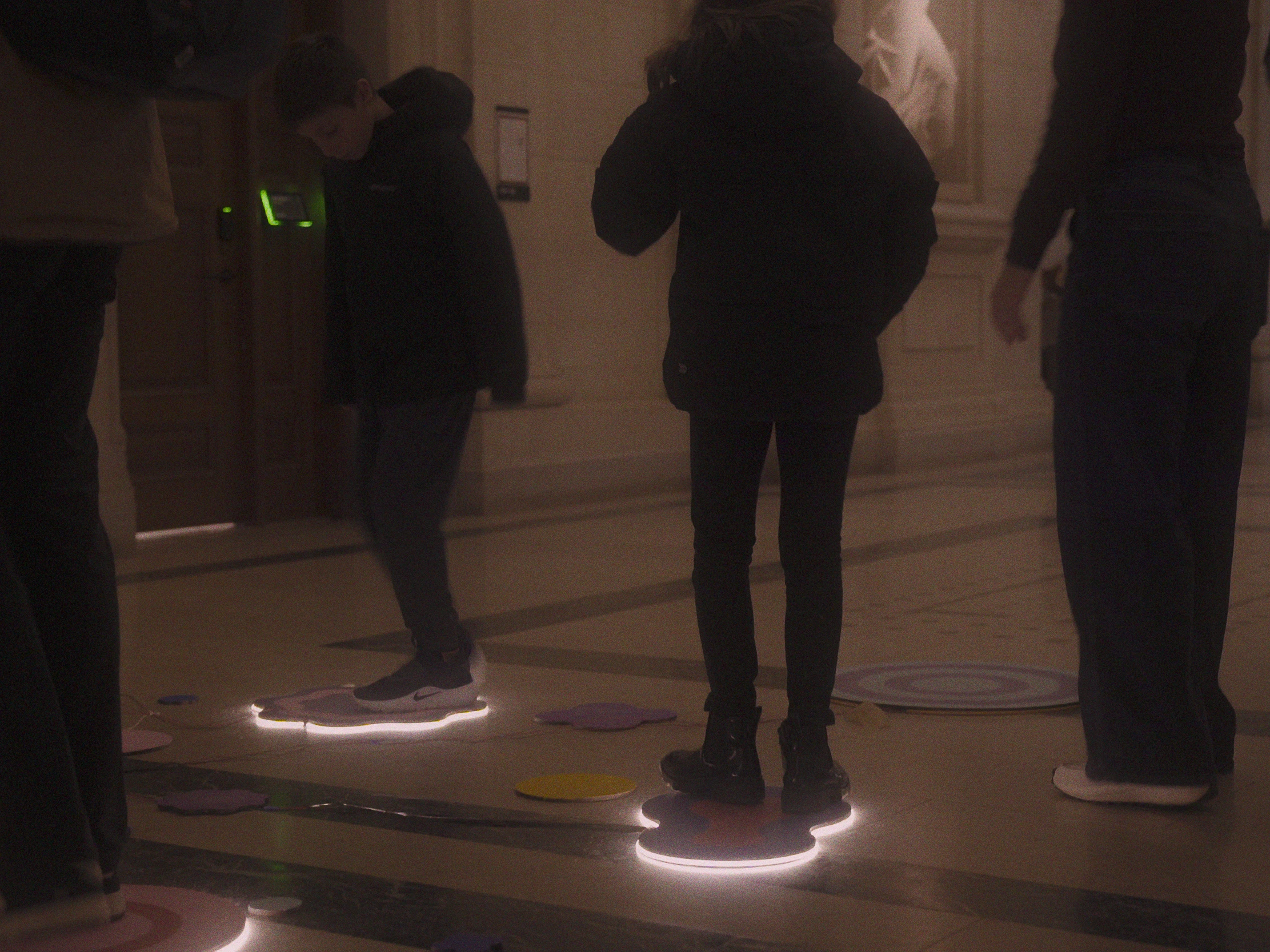
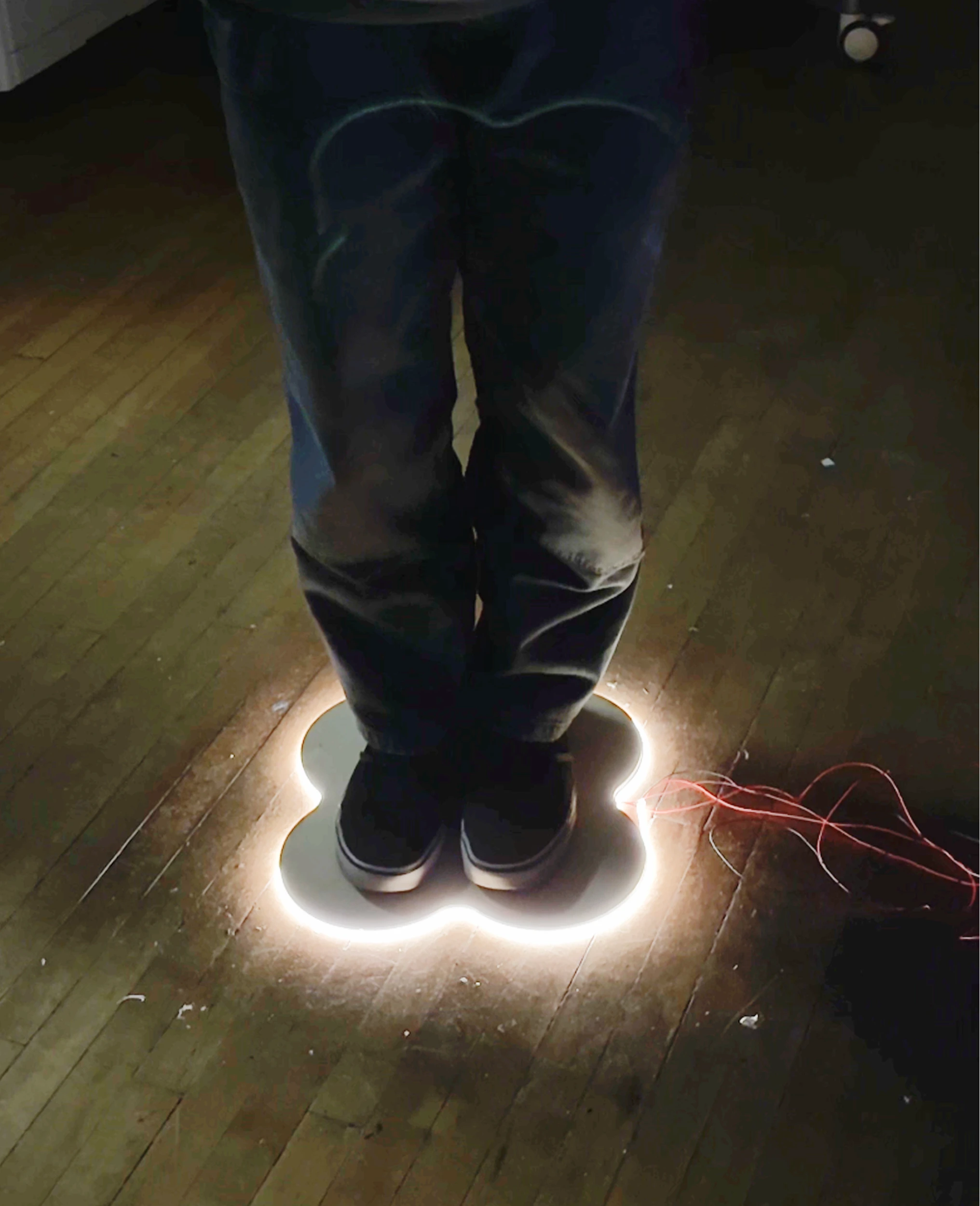
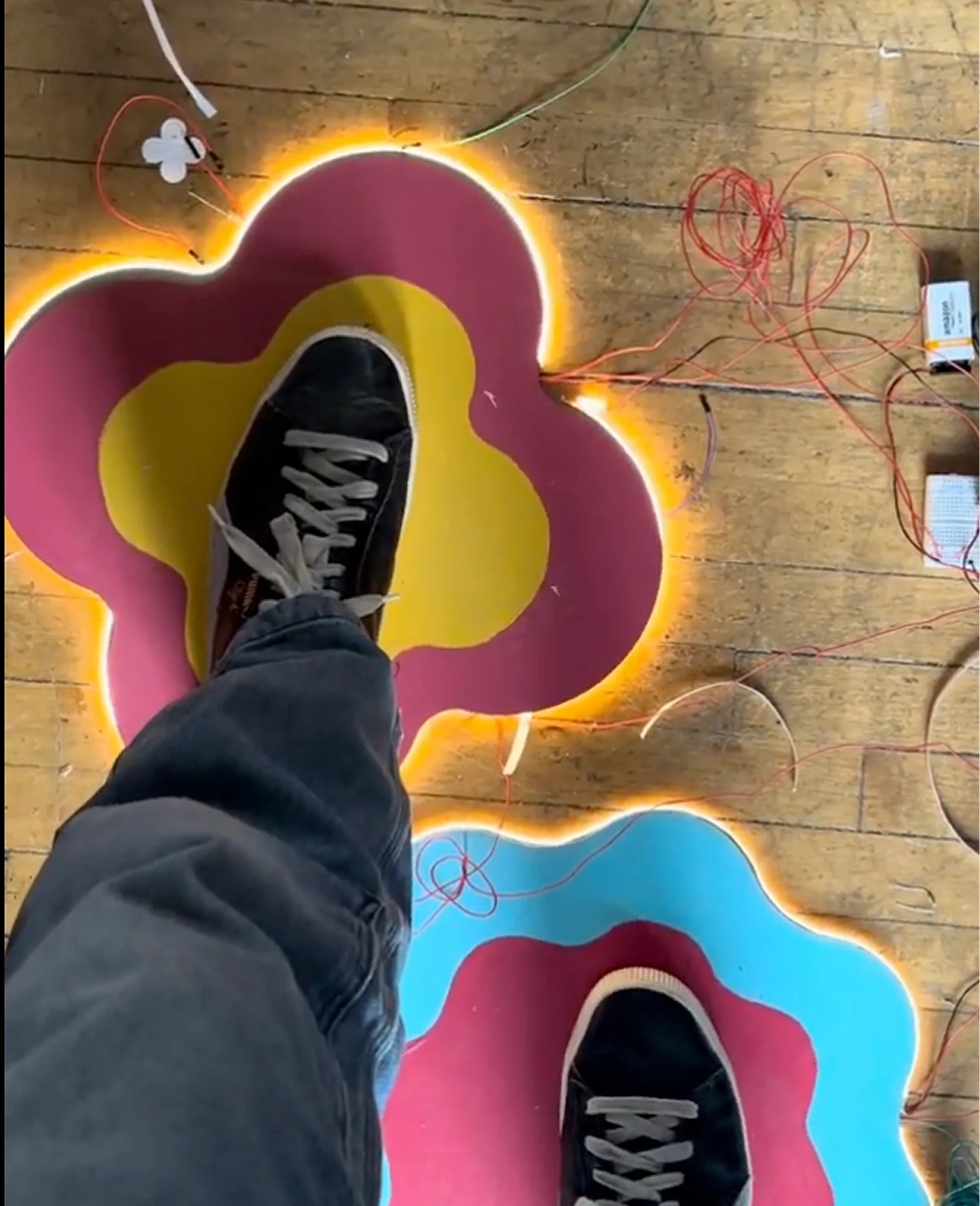
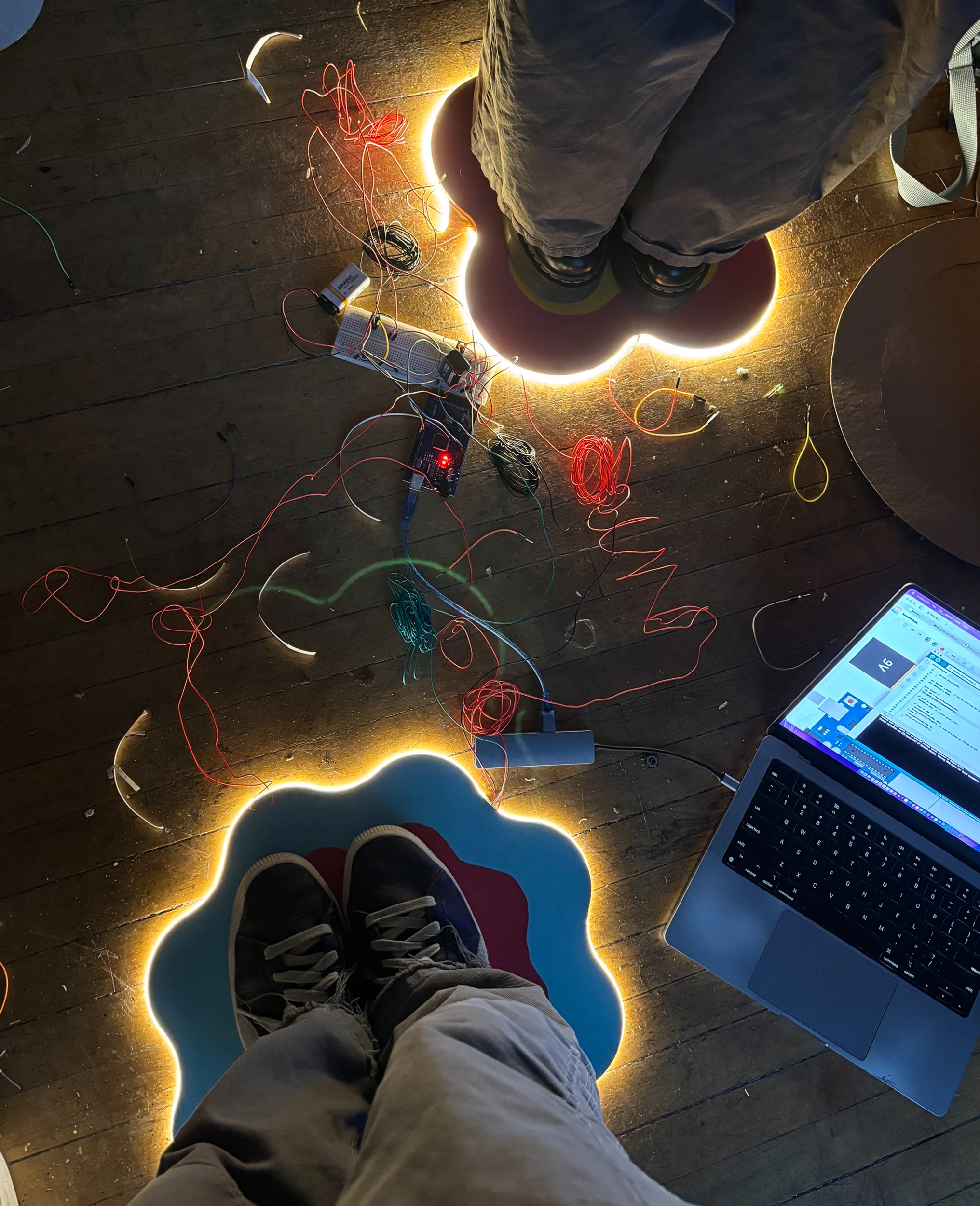
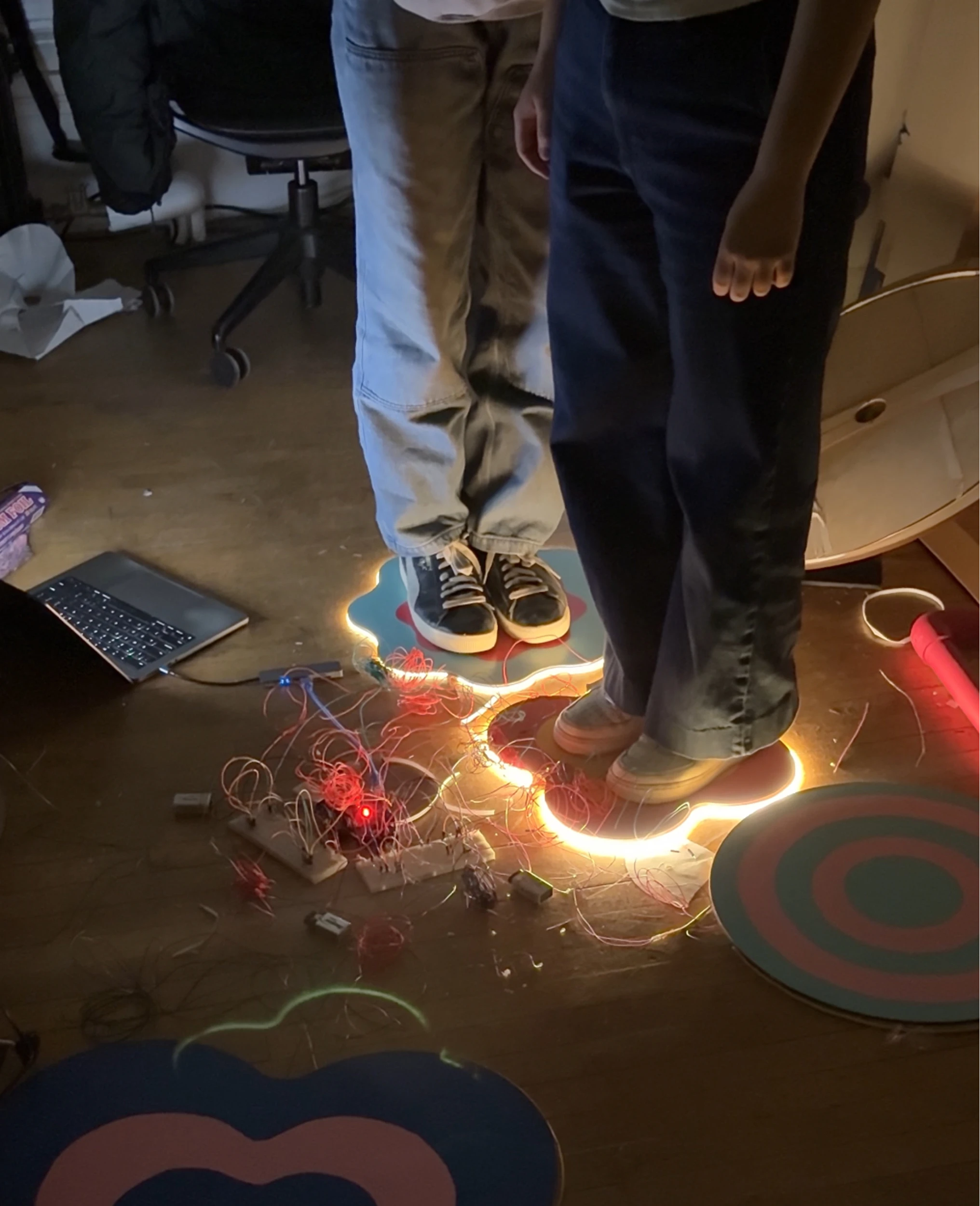
Where footsteps play is an interactive path of colorful shapes that encourage a sense of play and belonging. The more people that step on the path, the more the shapes glow, and individual notes and melodies build into a full song.
2025
timeline
4 weeks
environments
school
collaboration with
Karis Choe

Arduino, Logic Pro, Figma
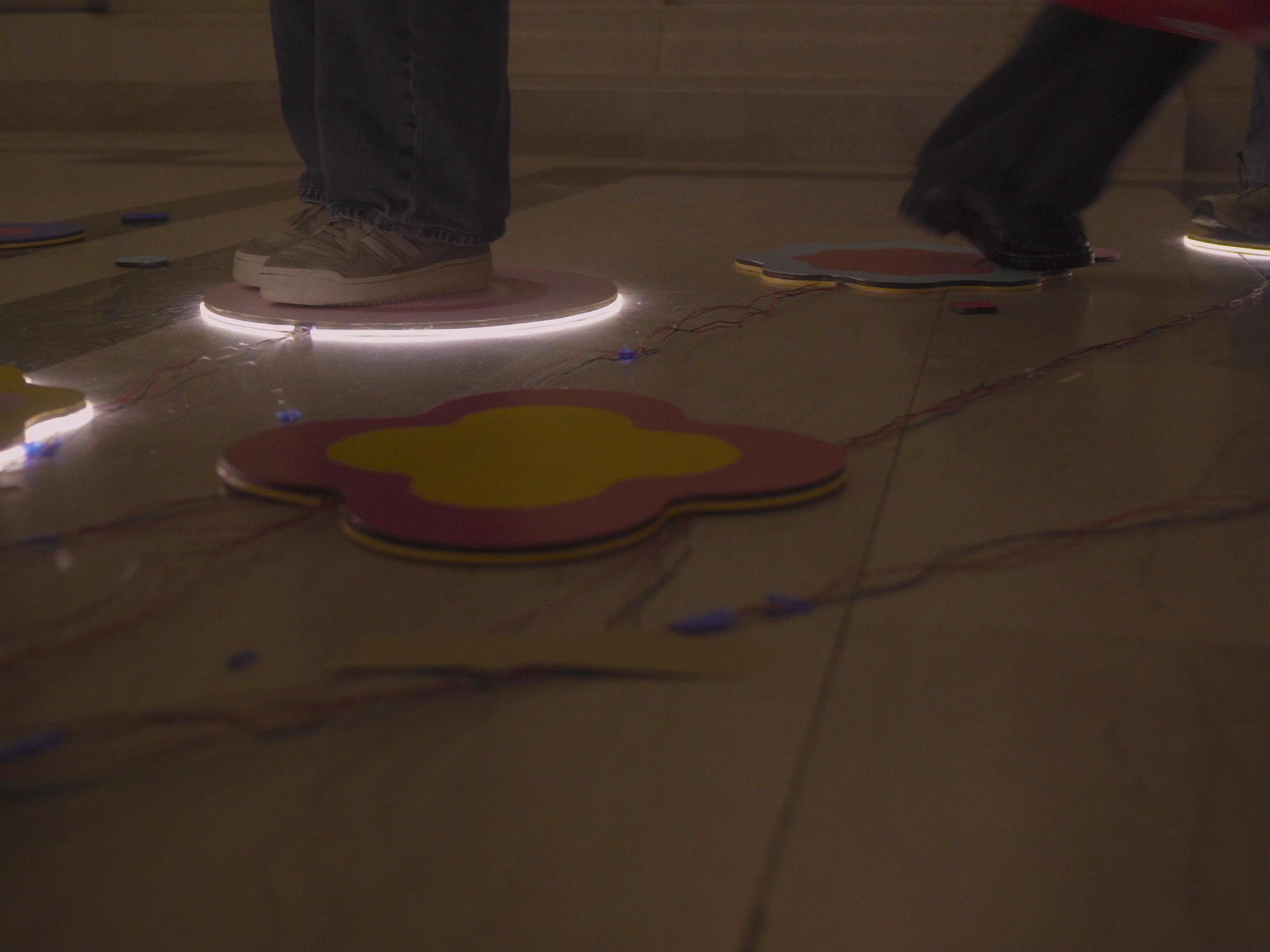
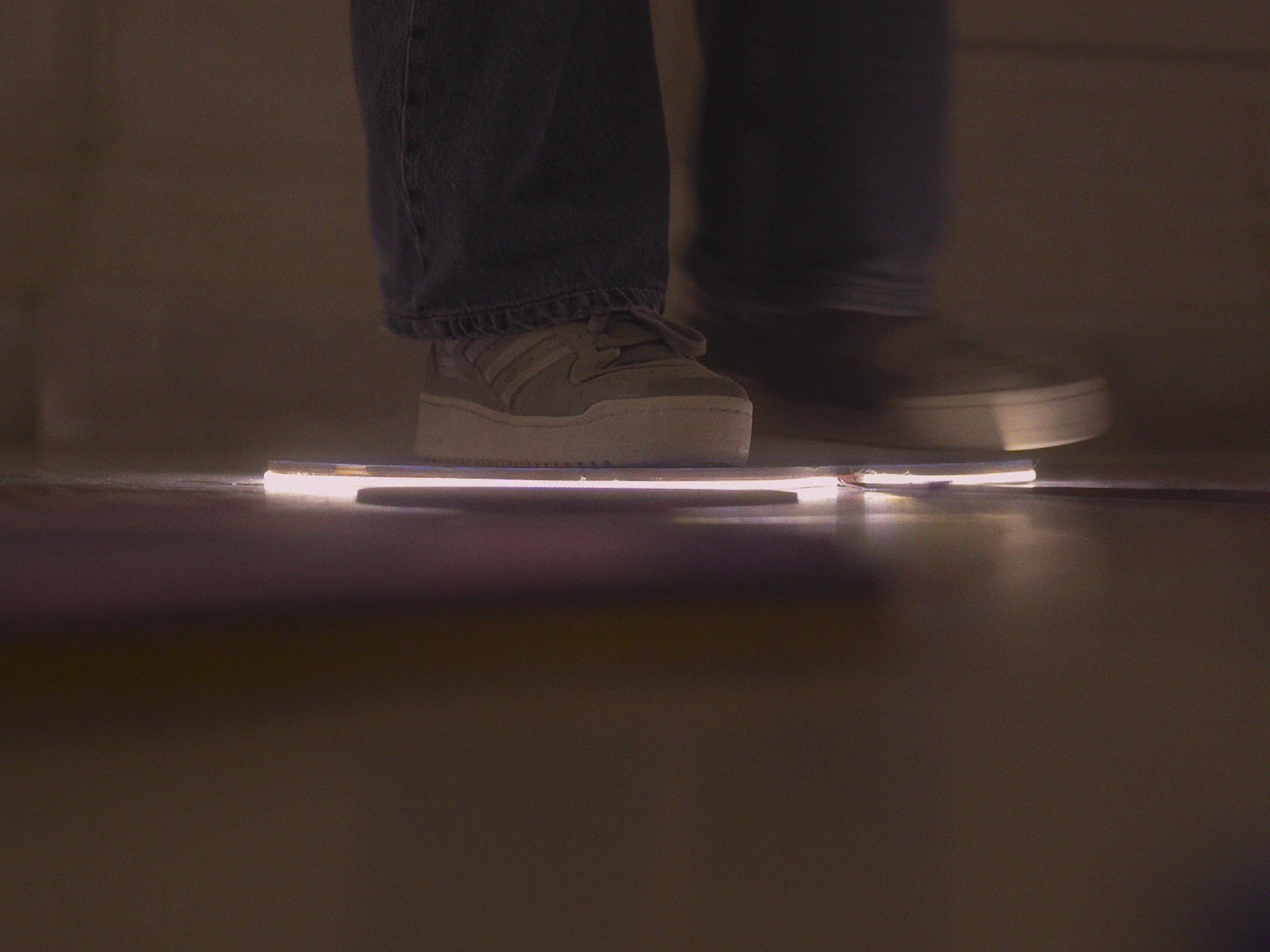
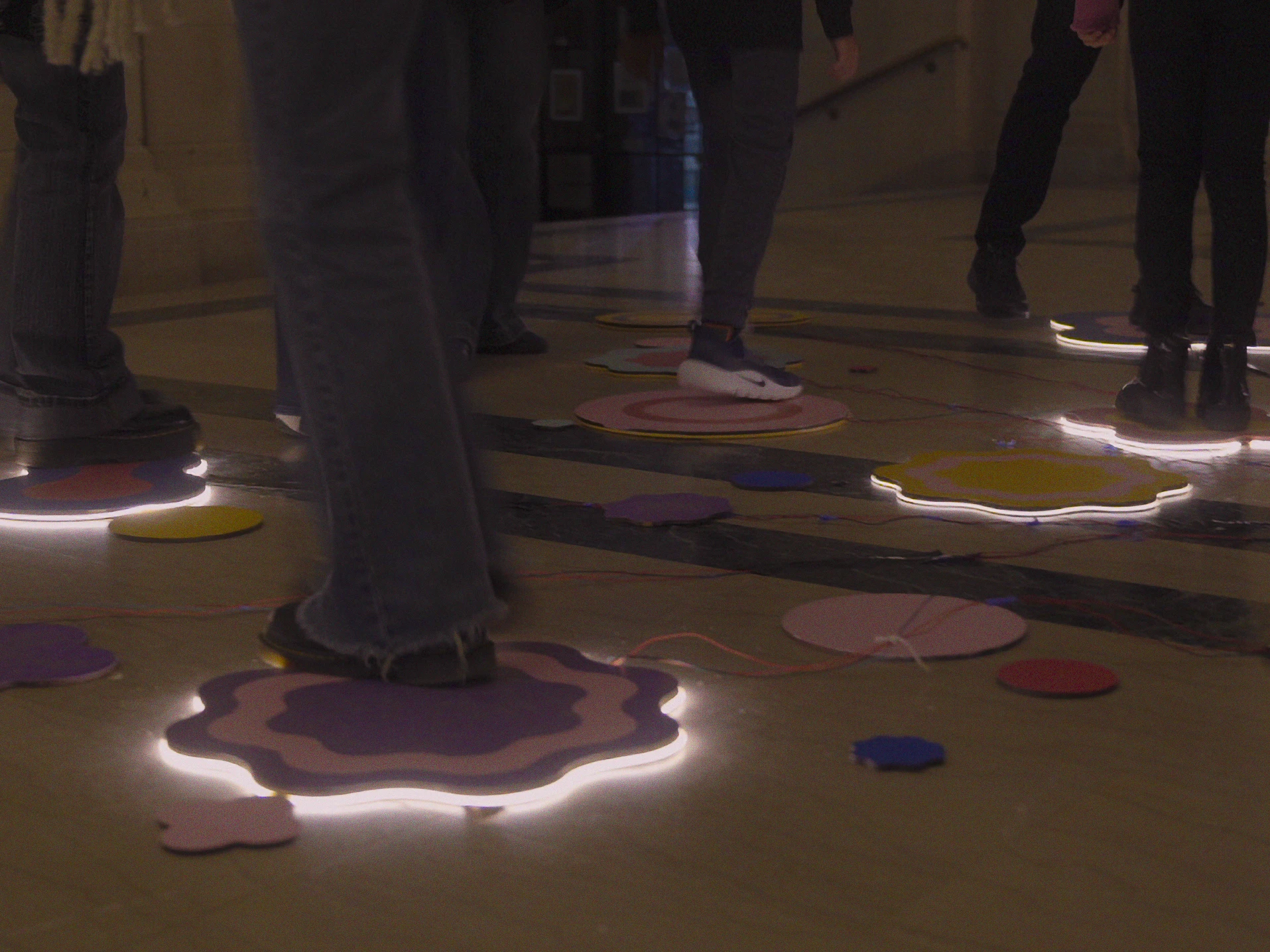
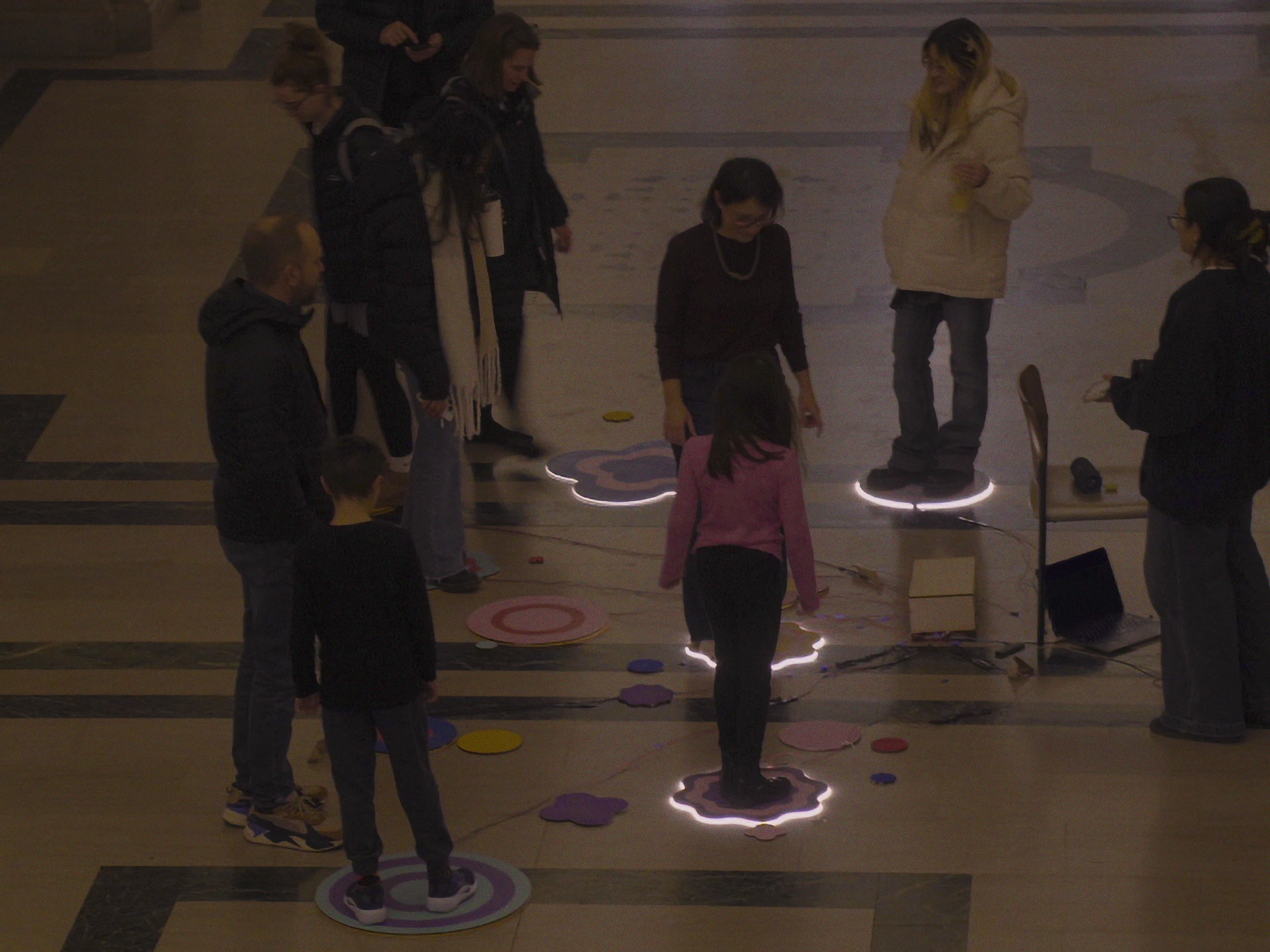
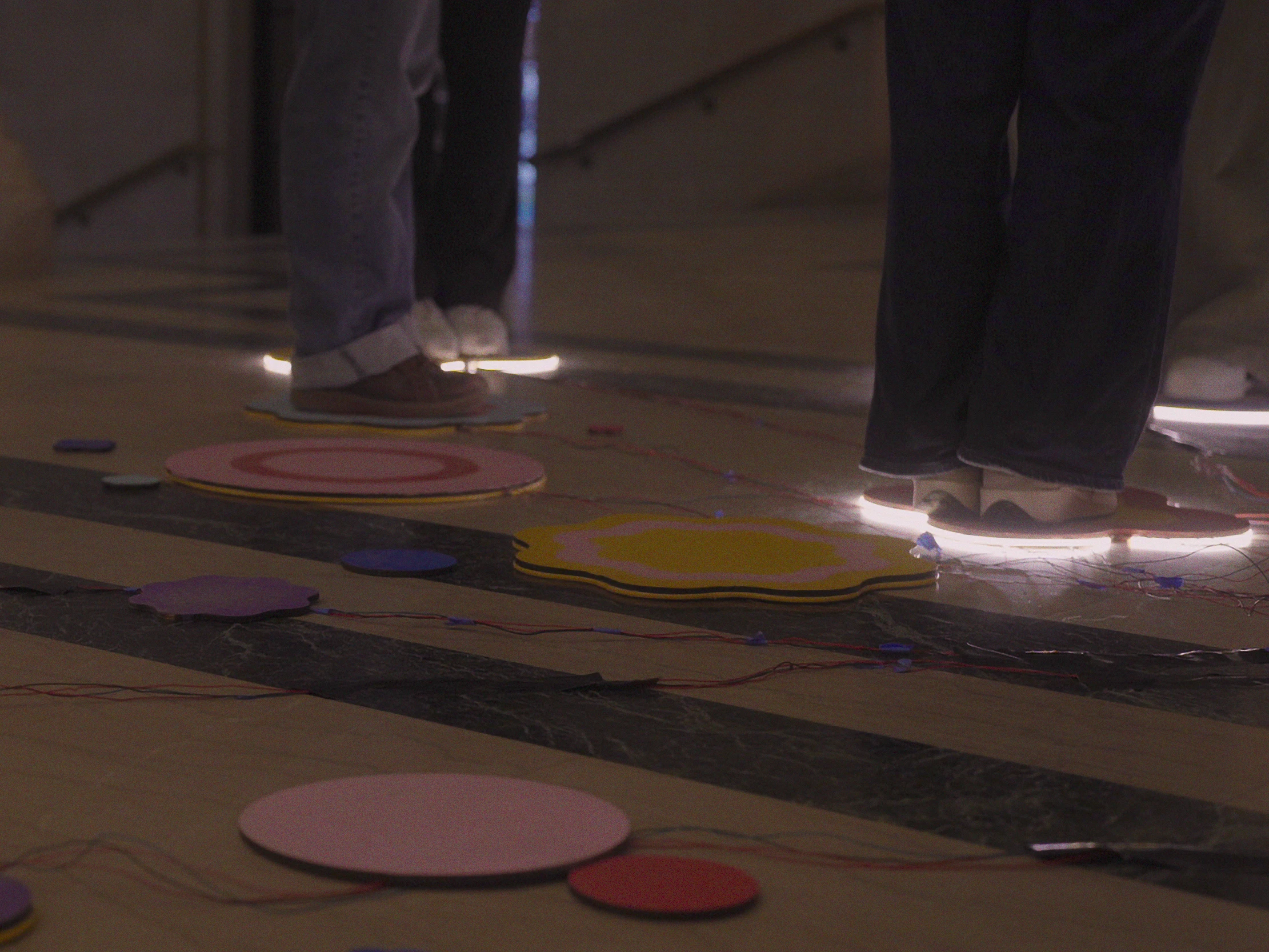
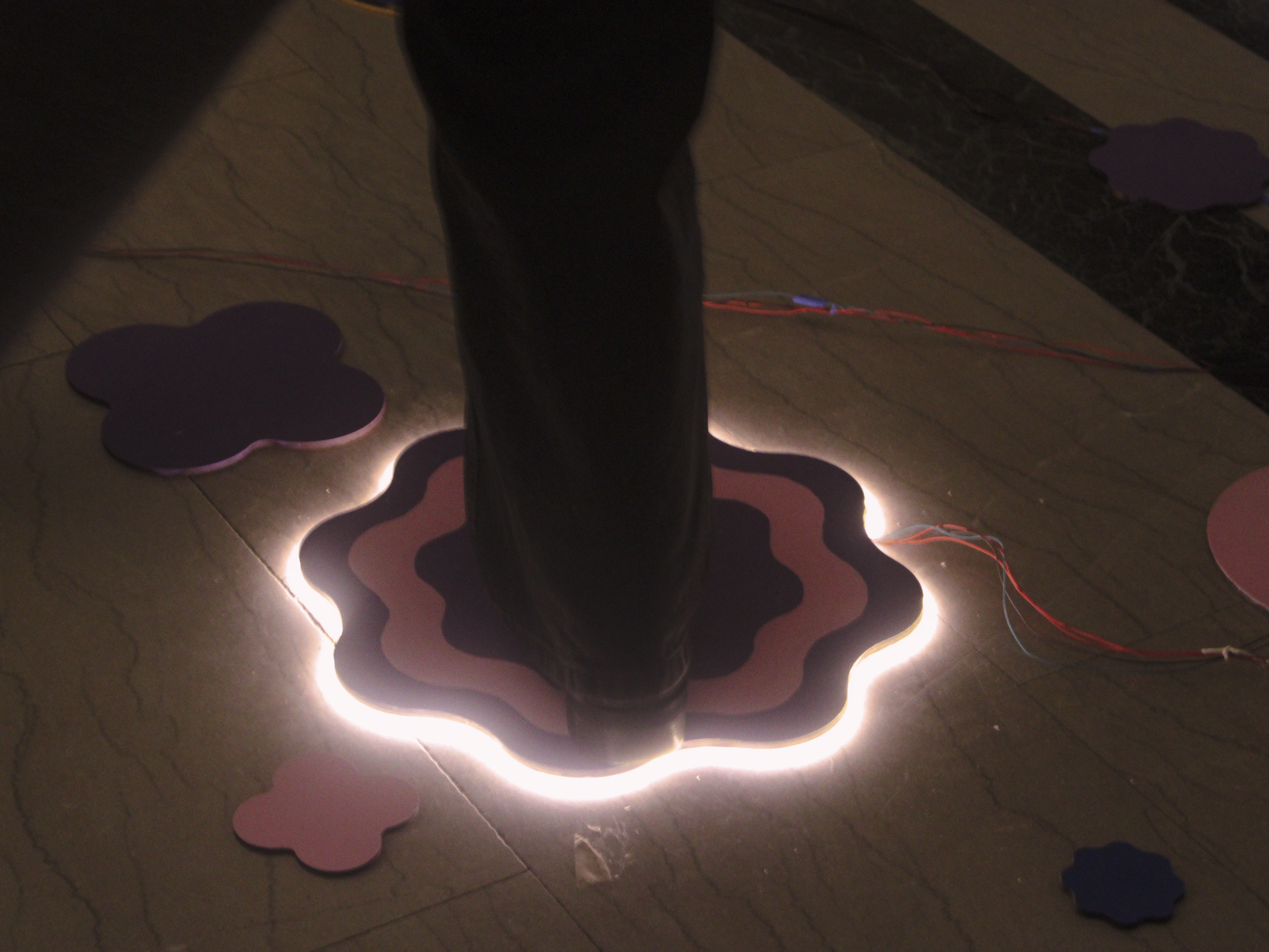
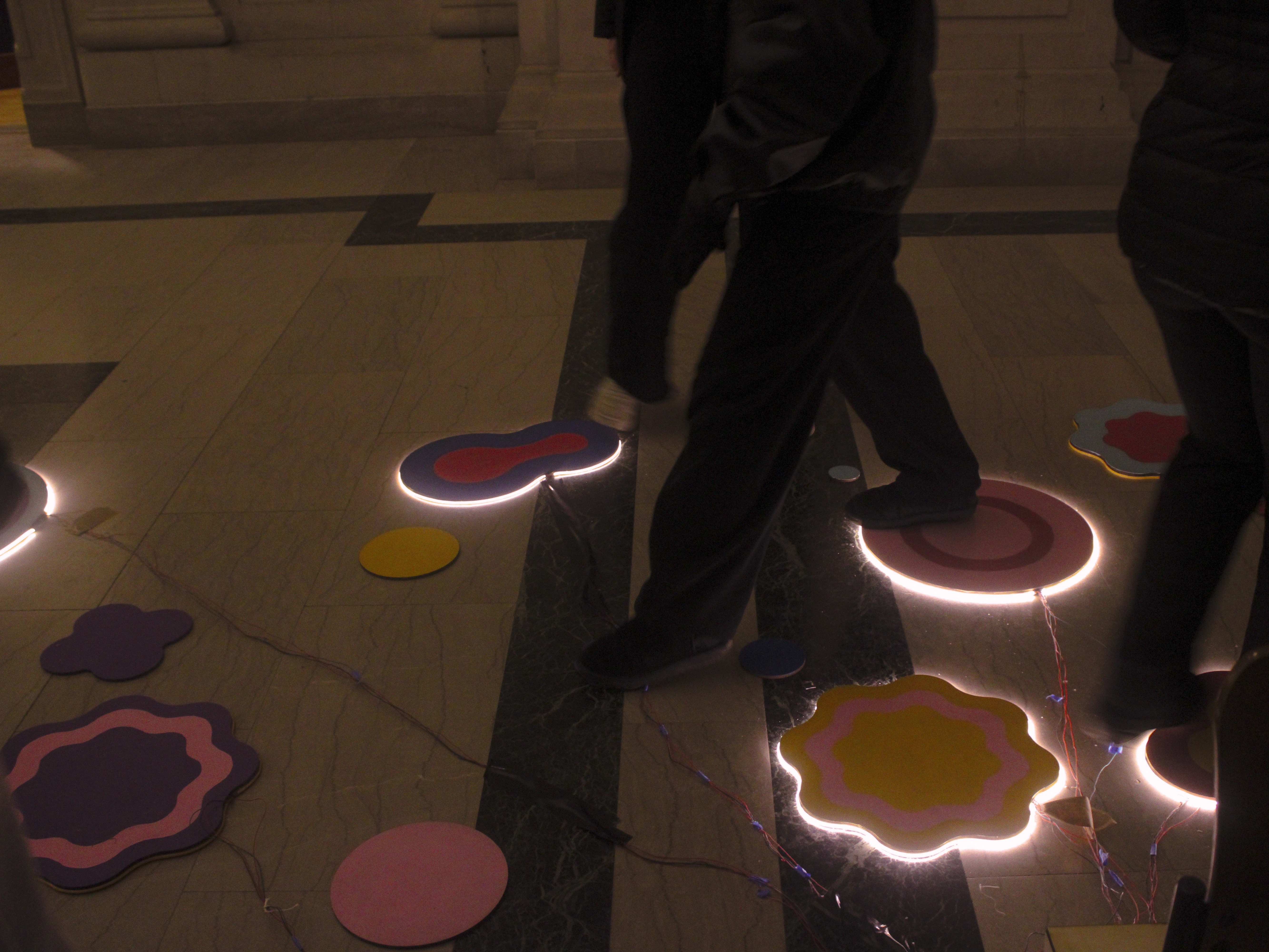
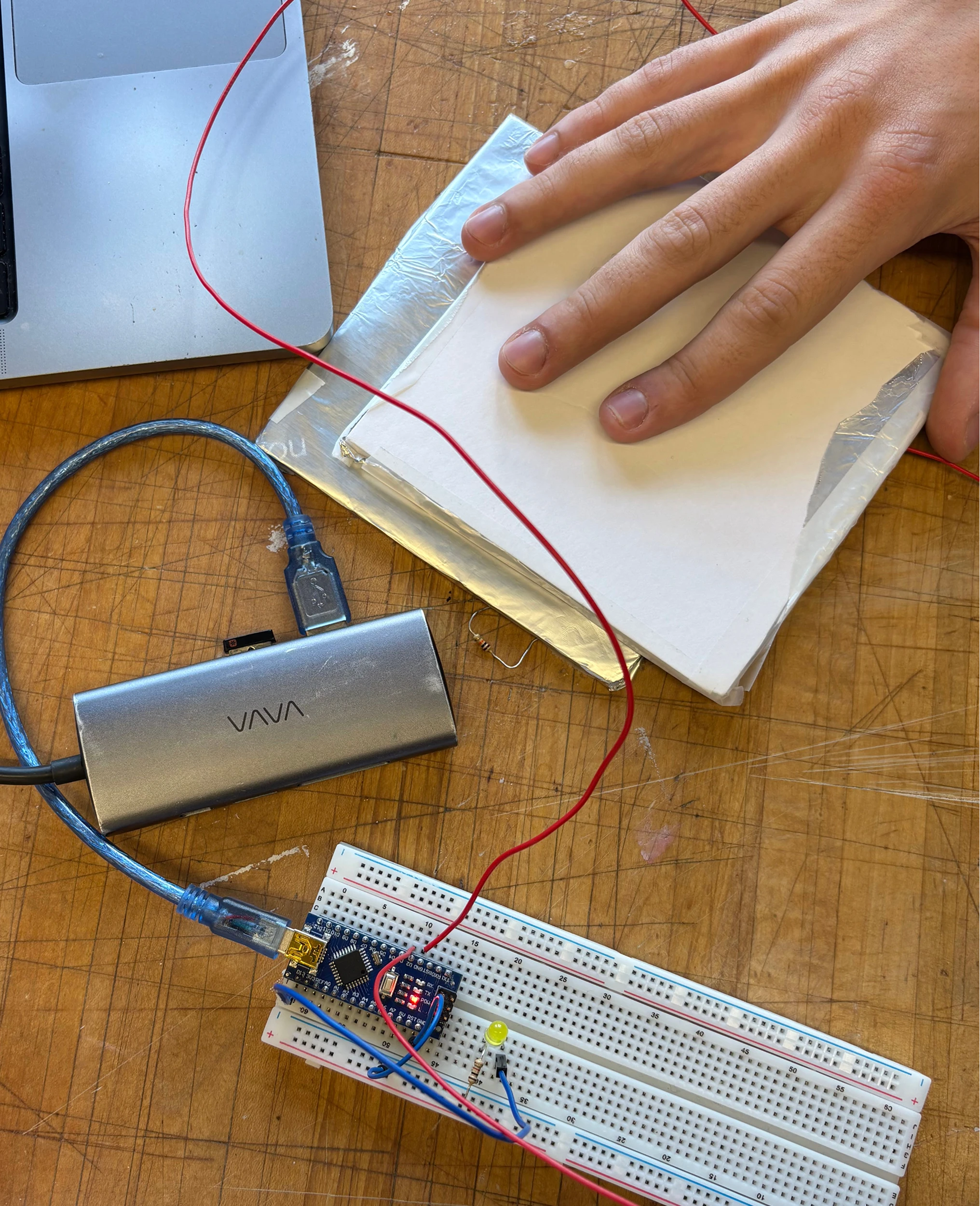
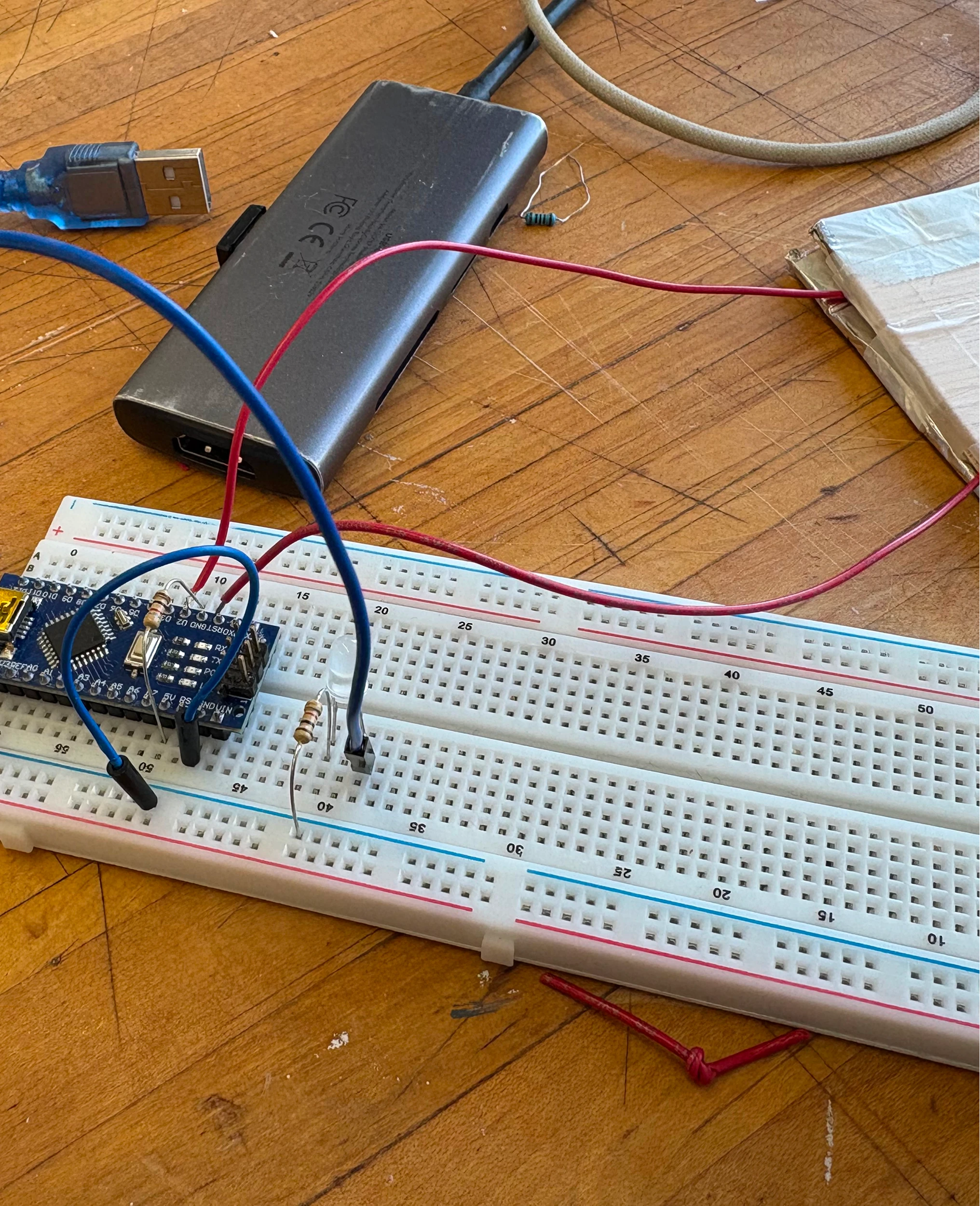
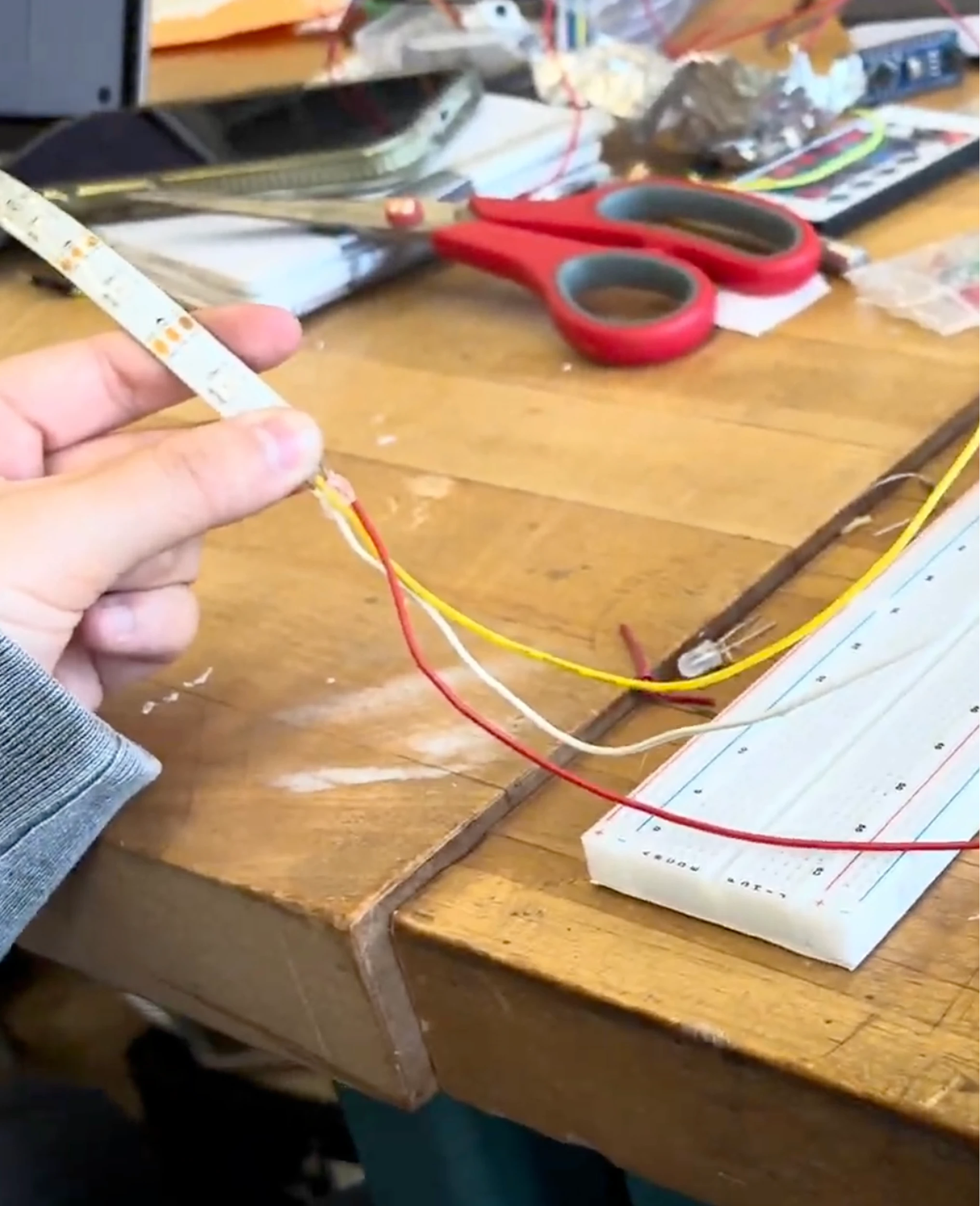
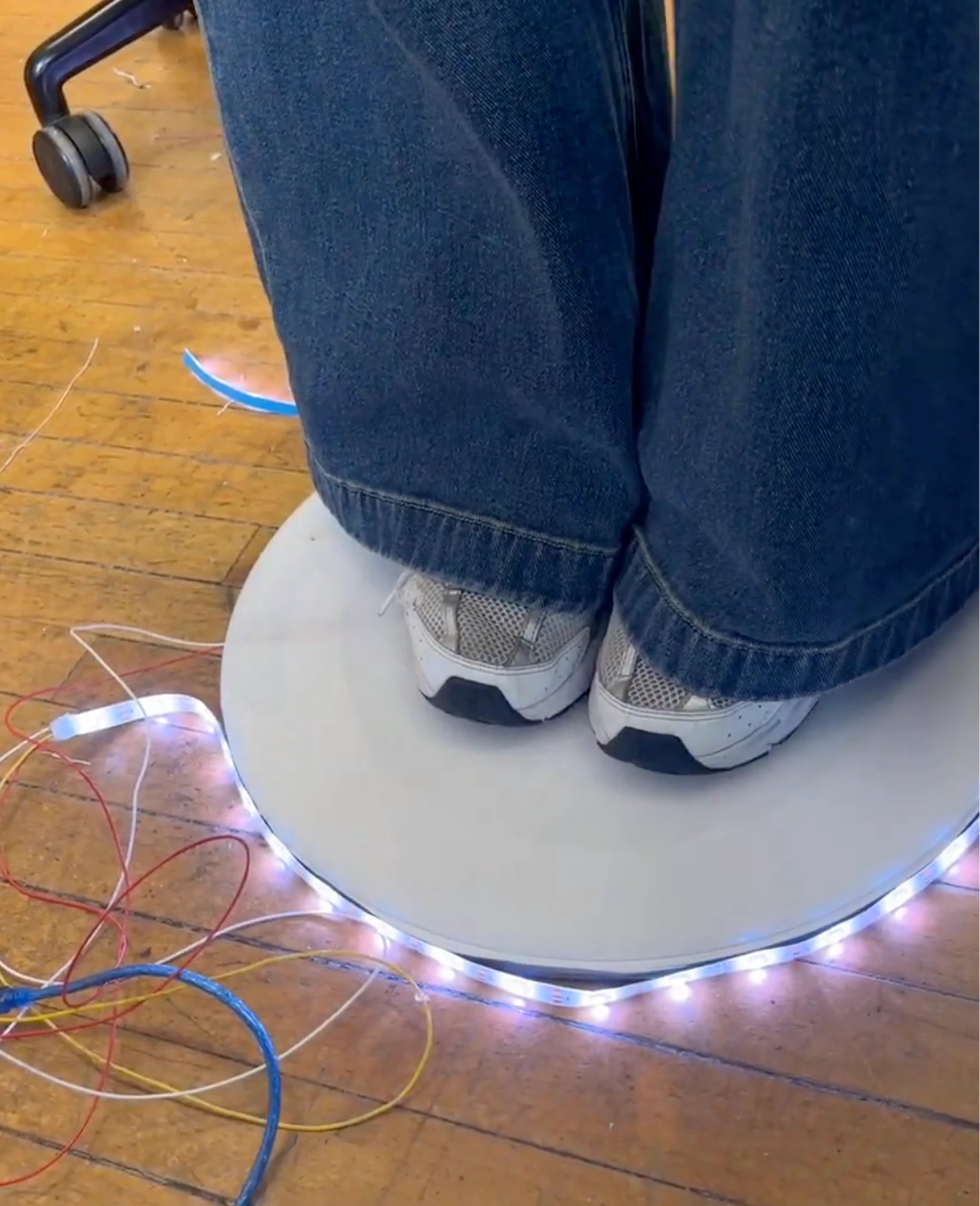
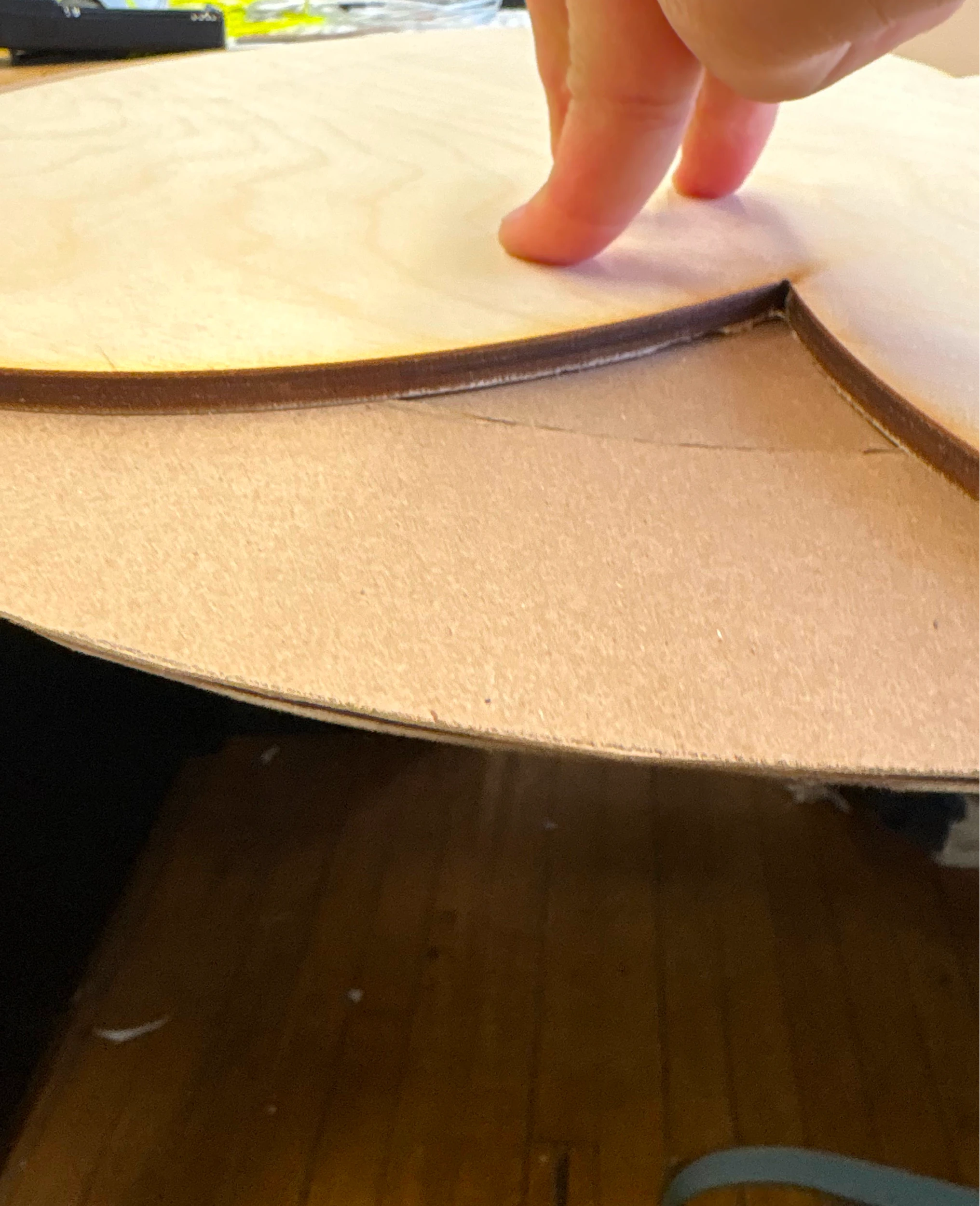
The base of the whole project is the shapes, which work essentially as switches - when you step on them, the metal on the top and bottom touch, completing the circuit. Most of our development here was trying to determine what thicknesses and materials would work. Acrylic was too brittle for the top piece, and our early tests with foam core for the bottom layers were too thick. Our final shapes are made of thin laser cut chipboard, with a piece of plywood on top.
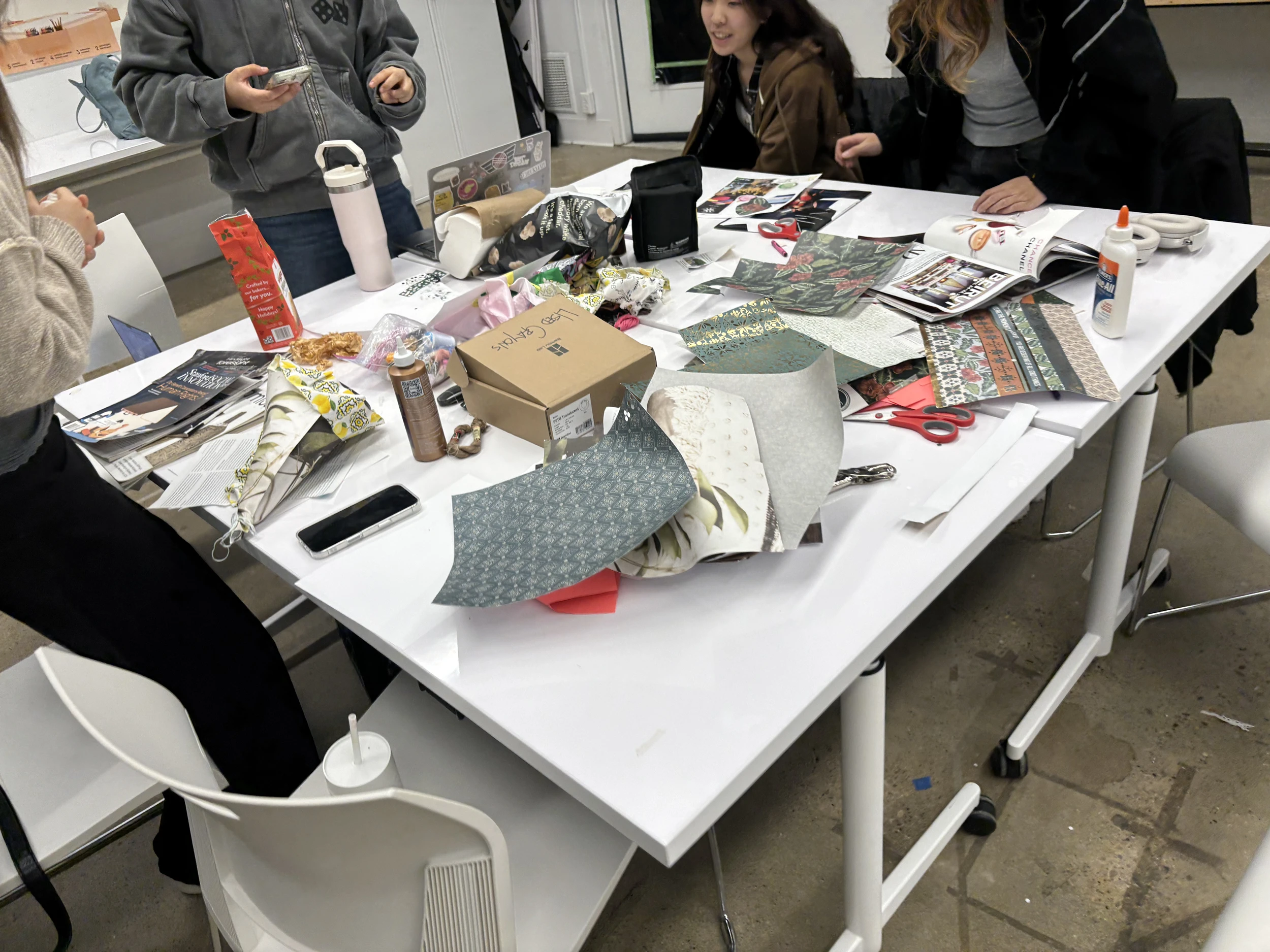
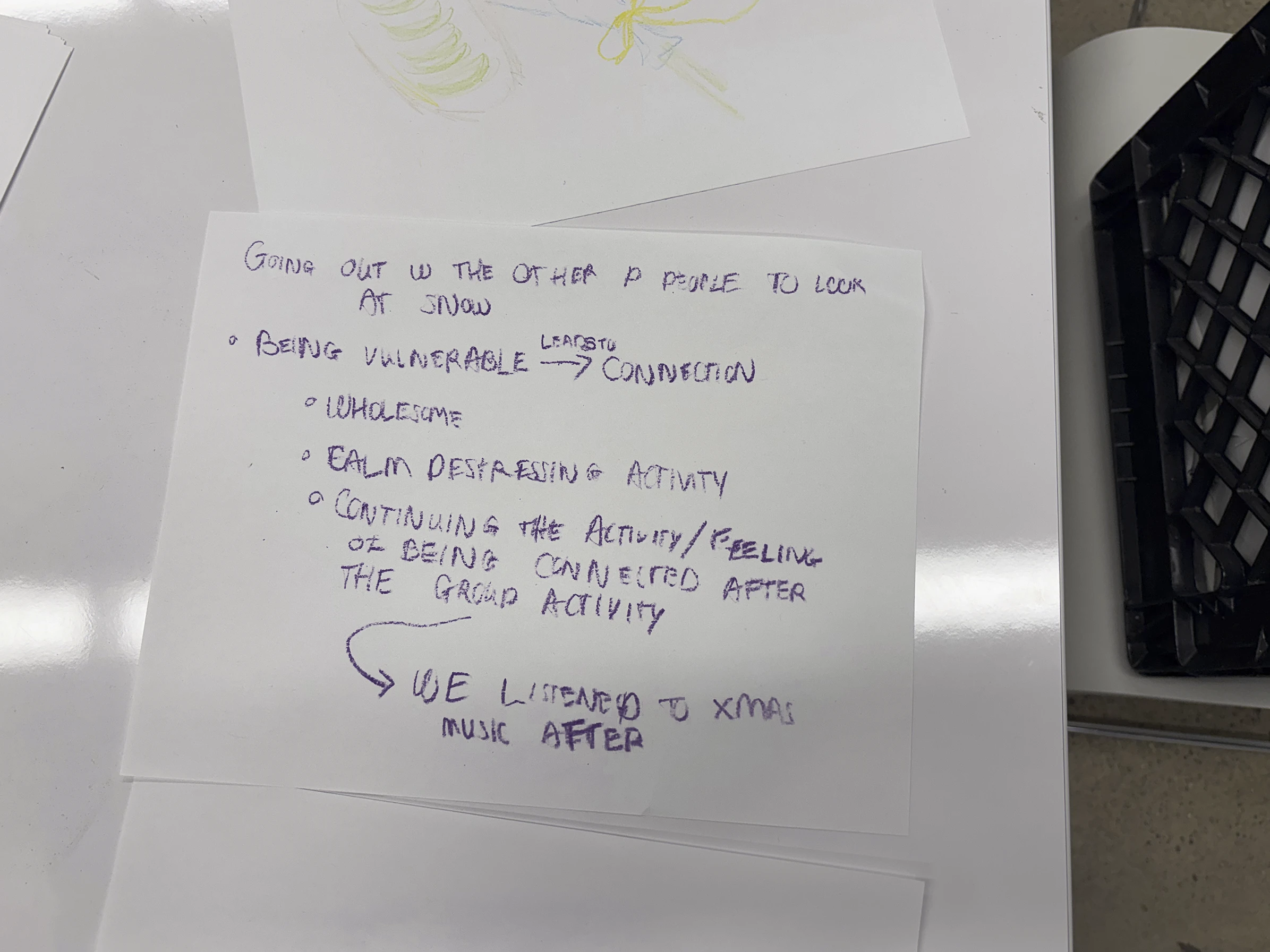
We ran two sessions with other students, the first to try to understand what colors and textures and maybe sounds people associate with feelings of belonging, which we did by having the participants make collages, and the second to understand how people might want to move on our path. The first, though we did get some insight into the kinds of colors people associated, a lot of their imagery they chose to collage with was less abstract than we expected, and more explicitly about specific memories and the things there.
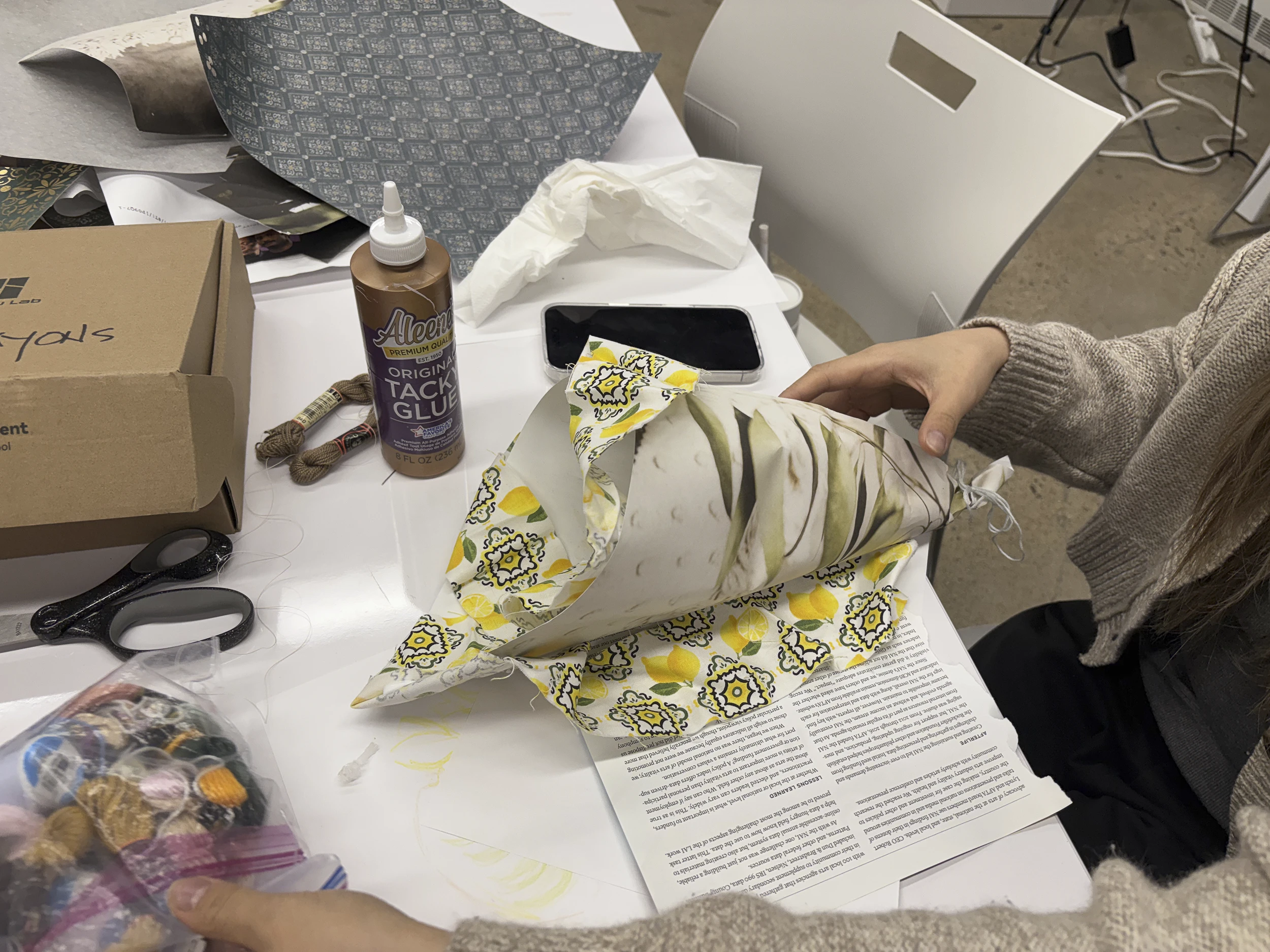
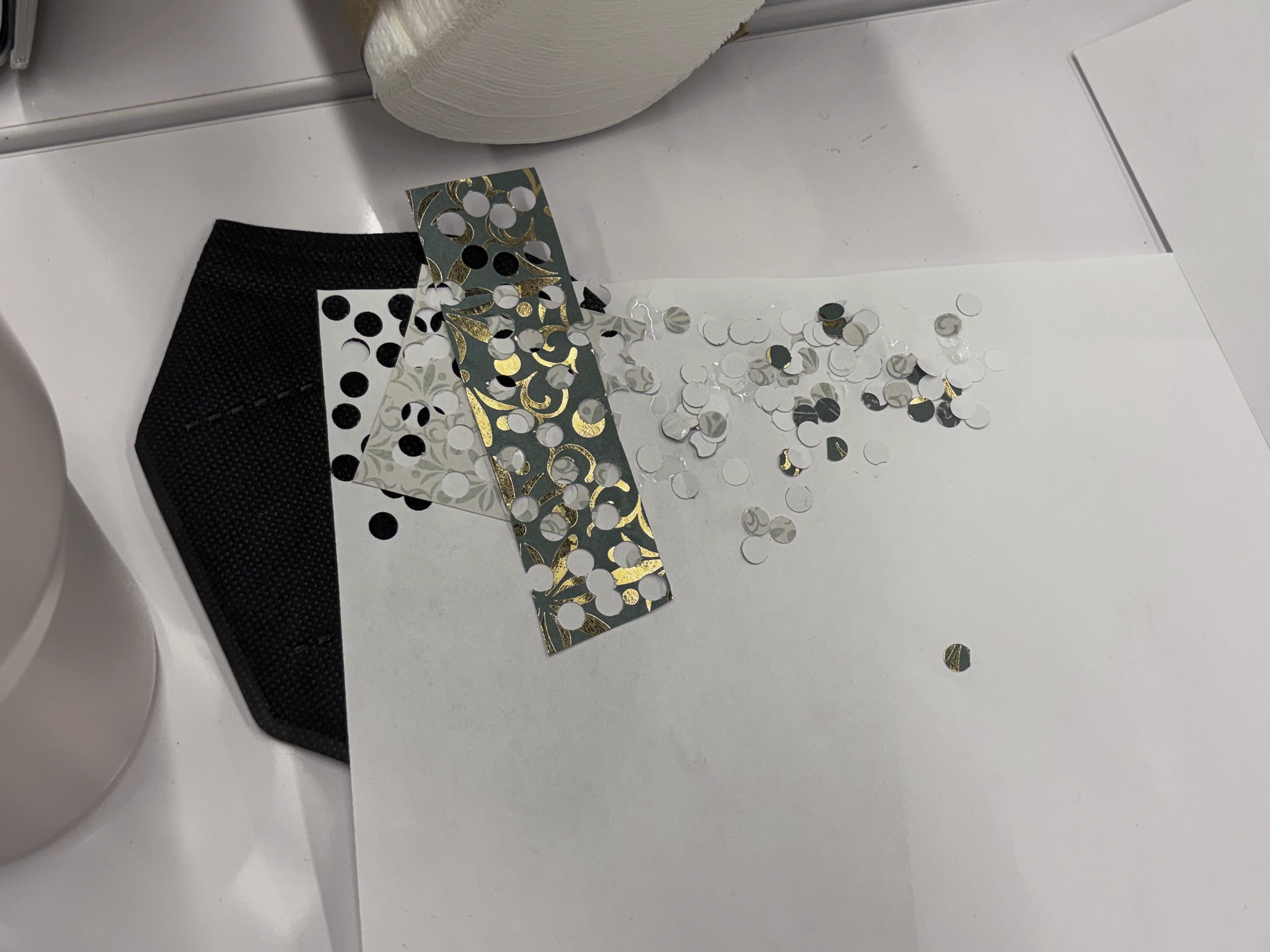
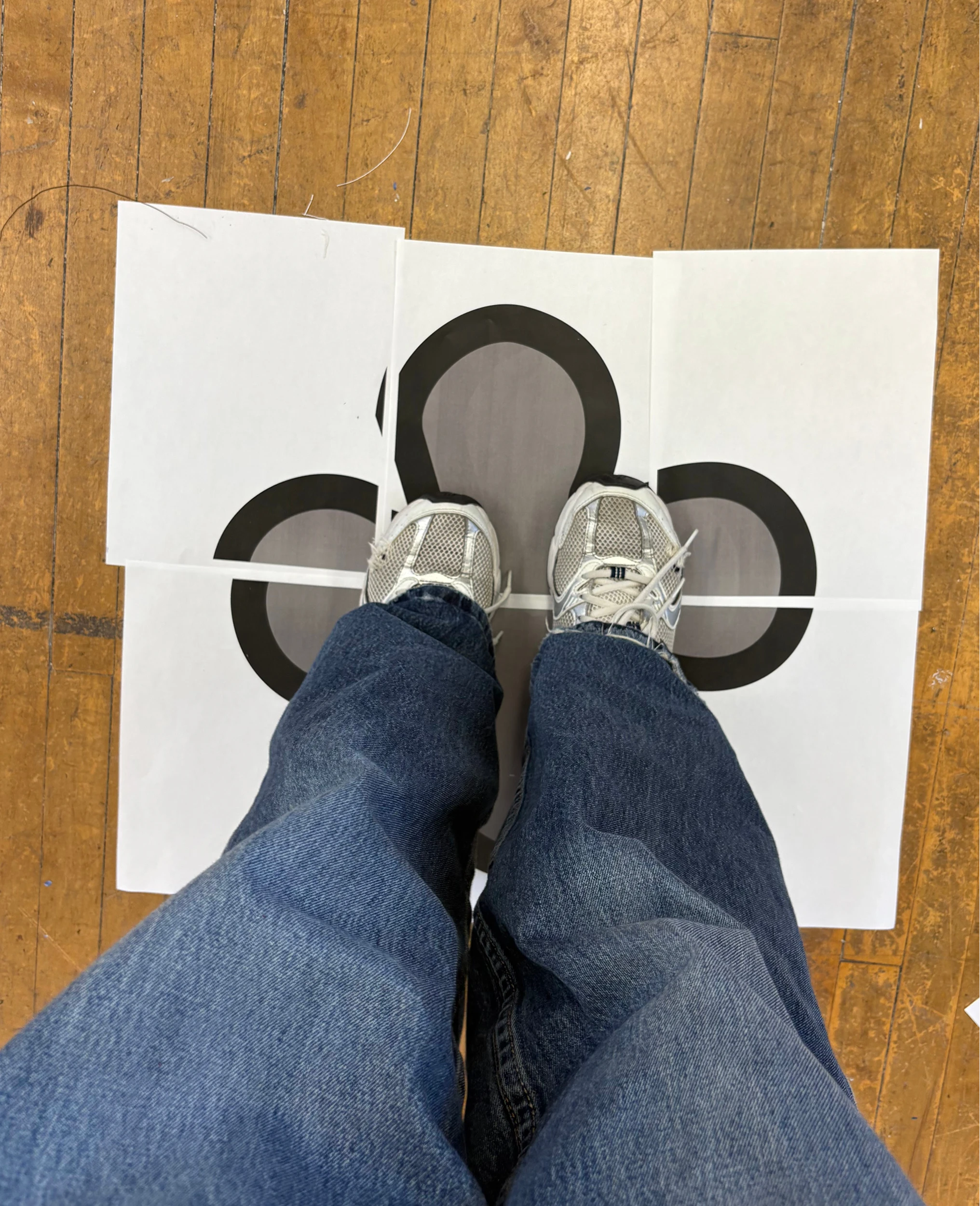
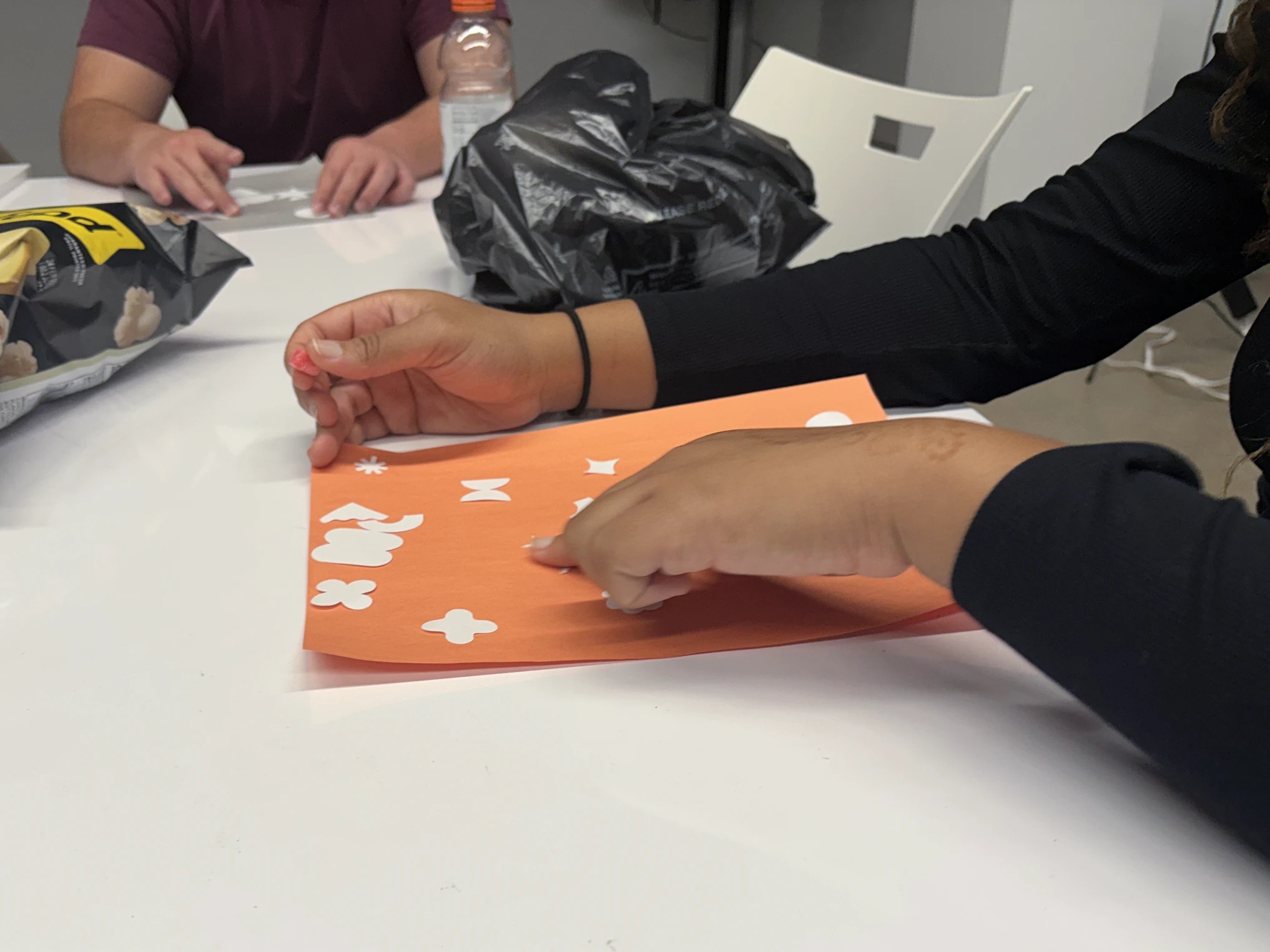
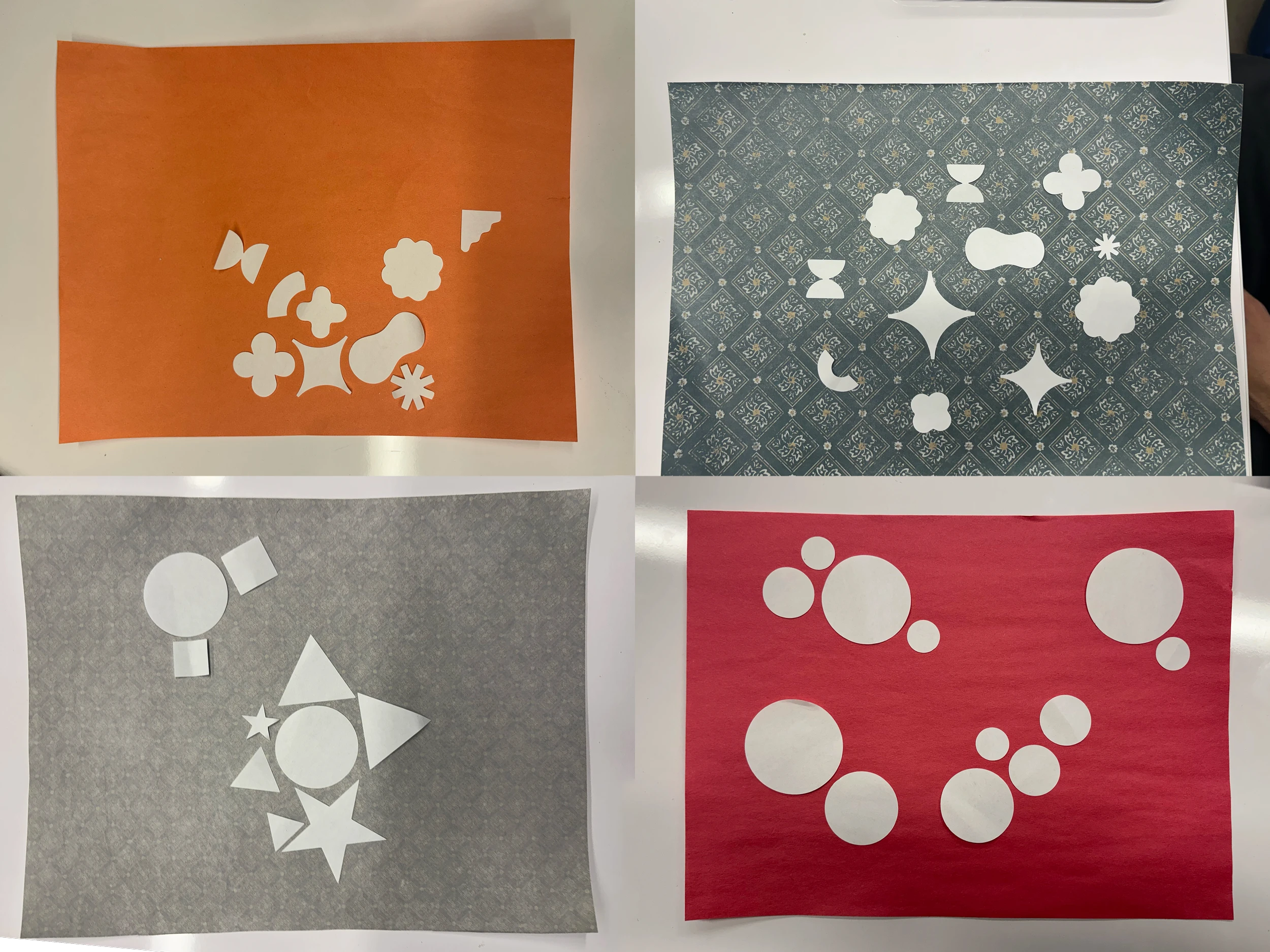
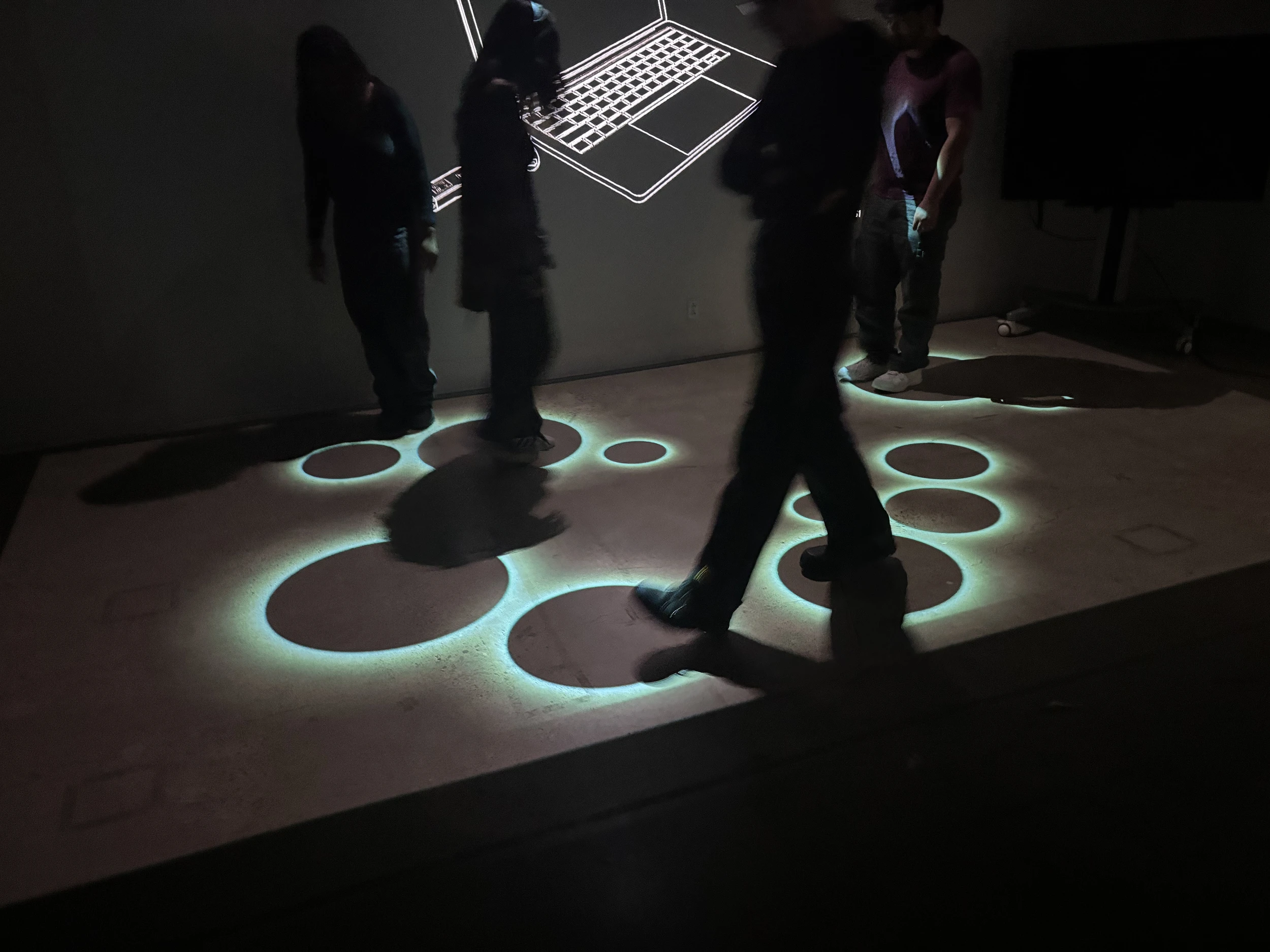
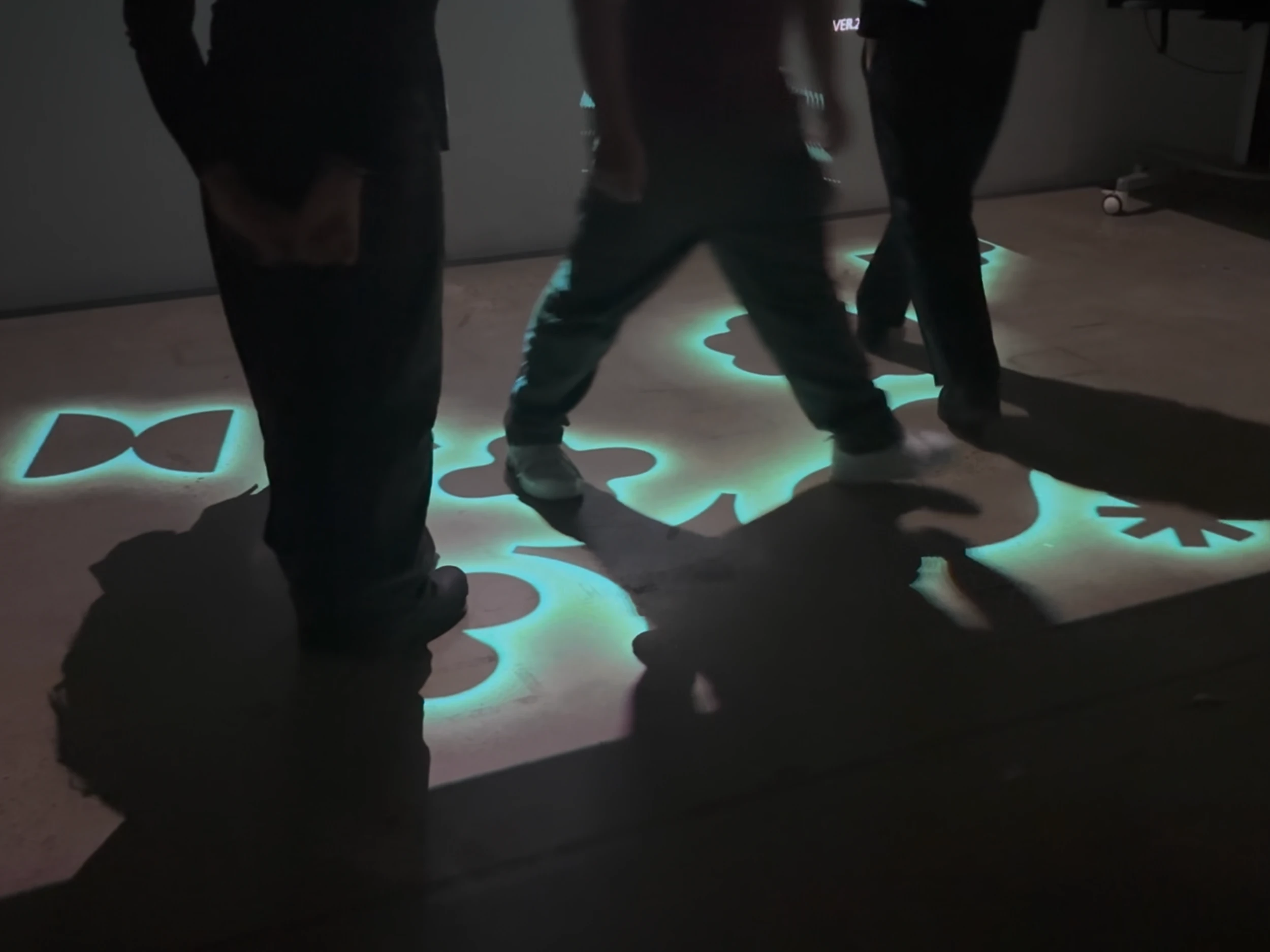
In the second session, we had the participants make a layout with small paper cutouts, and then projected those layouts on the ground. People gravitated towards the layouts with multiple clusters of shapes as opposed to ones with more even or more singularly clustered arrangements. They also pointed out which shapes they liked to stand on, and which felt awkward. We also found that people were comfortable being closer than we expected, even in a group of mostly strangers.
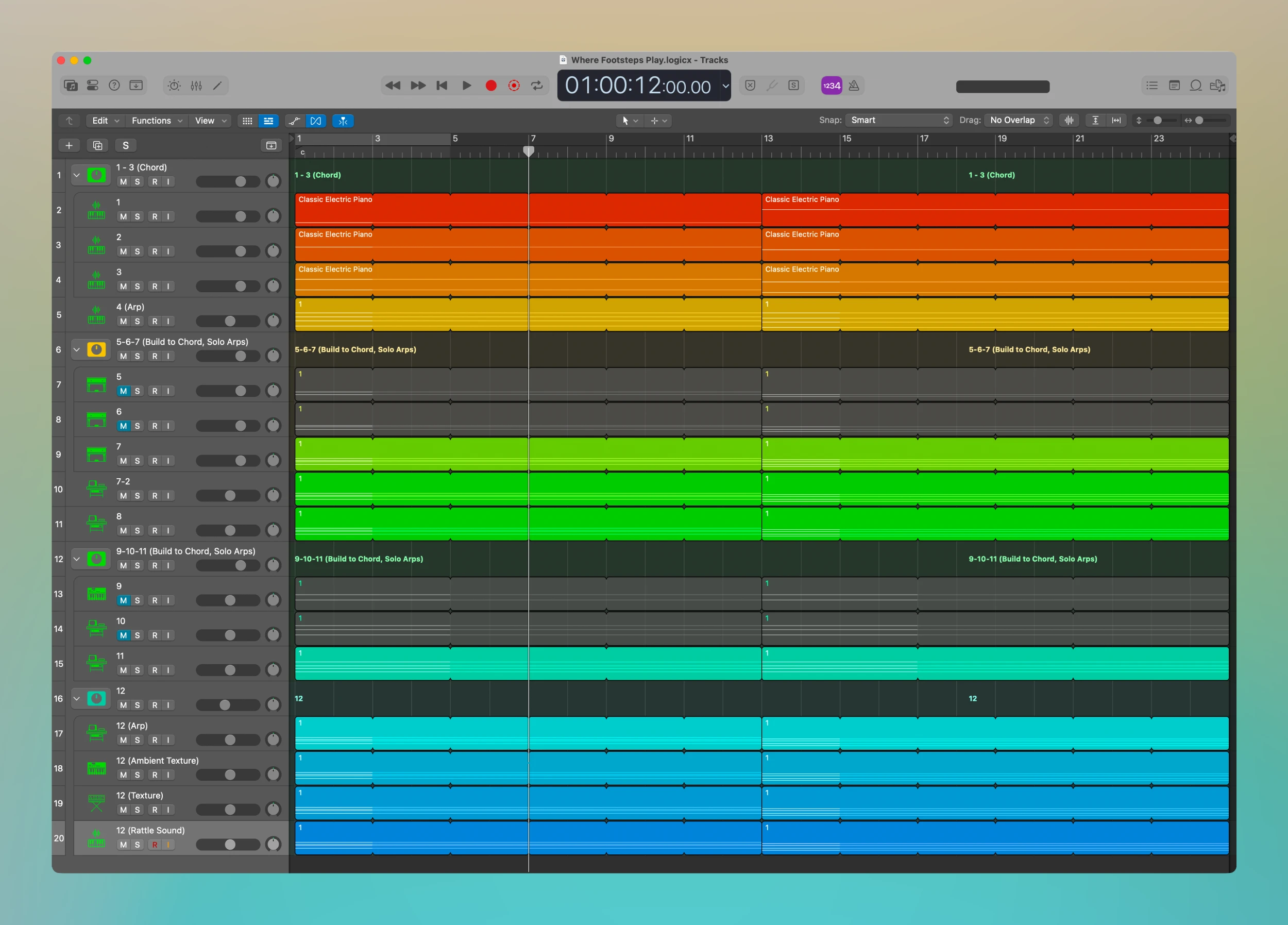
While we had initially planned on using an existing piece of classical music (tying small groups of notes to each shape), even though the point was that it should feel empty when less people are on the path, it became hard to tell if it was working, with awkwardly long gaps between notes. Instead, we decided to compose our own more ambient piece that adds new elements based only on the number of people on the path. When only one person is on the path, there's a single note repeated, building into one, then more chords as more people join. Eventually, more melodic and textural elements appear, until every shape has a person.